
The Ultimate Ha Giang Loop Guide: A Raw & Authentic 4-Day Itinerary

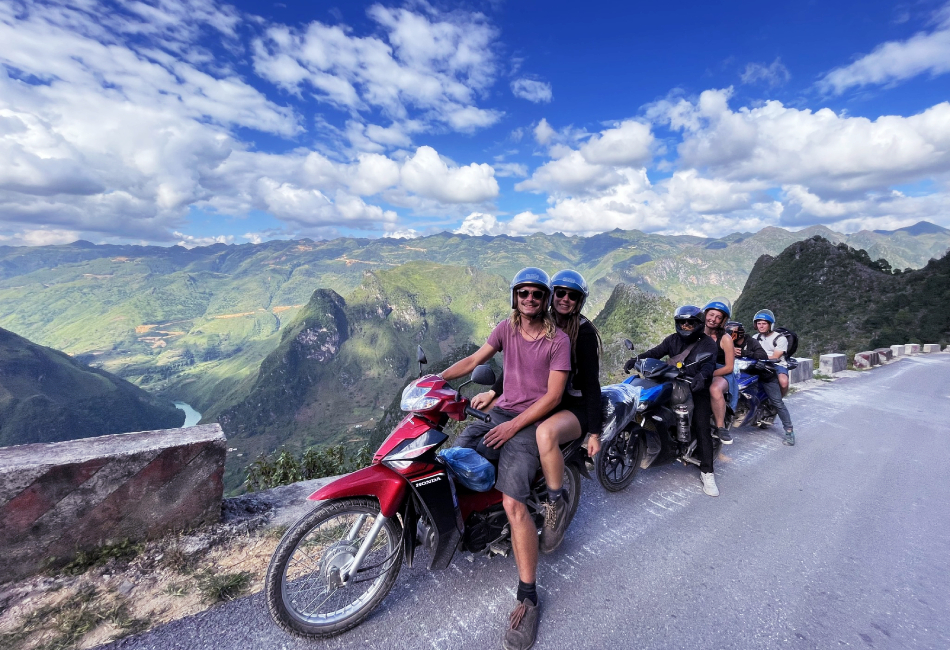
The Ha Giang Loop is no longer a hidden secret. Winding through over 350 kilometers of jaw-dropping limestone peaks and vertical cliffs in Vietnam’s far north, it has rightfully earned its legendary status among adventure travelers.
But let’s be completely honest: Ha Giang has changed. With the boom of mass tourism, miles-long convoys of “Easy Rider” tours, and loud party hostels cropping up in remote towns, it is easy to lose the sense of raw freedom that once defined this loop.
This guide is not just another robotic logistics checklist. These are hard-earned insights, realistic realities, and a strategically timed itinerary designed to help you experience the wild, untamed essence of Ha Giang.
🗺️ 1. Route Overview & Orientation
The basic Ha Giang Loop starts and ends in Ha Giang City, looping through the four main districts of the Dong Van Karst Plateau Geopark: Quan Ba, Yen Minh, Dong Van, and Meo Vac.
[Ha Giang City] ➔ (Bac Sum Pass) ➔ [Quan Ba] ➔ [Yen Minh] ➔ [Dong Van] ➔ (Ma Pi Leng Pass) ➔ [Meo Vac] ➔ [Du Gia] ➔ [Ha Giang City]There are two primary ways to tackle the loop:
- Self-Drive: Only for those with verifiable, confident experience riding geared motorbikes on steep mountain roads.
- Easy Rider: You ride pillion behind an experienced local driver. This is the safest way to enjoy the mind-blowing scenery without stressing over the road.
Personal Insight: “If you choose to self-drive, the mechanical reliability of your bike is far more critical than saving a few bucks. Do not cheap out by saving $2 a day on a bike with worn brakes or bald tires. Ha Giang’s cliffs offer zero margin for mechanical error.”
🏍️ 2. The 4-Day, 3-Night Itinerary: Beating the Crowds
This itinerary counter-programs the mass-tour schedule, shifting your travel windows slightly so you can enjoy the most iconic viewpoints in peace.
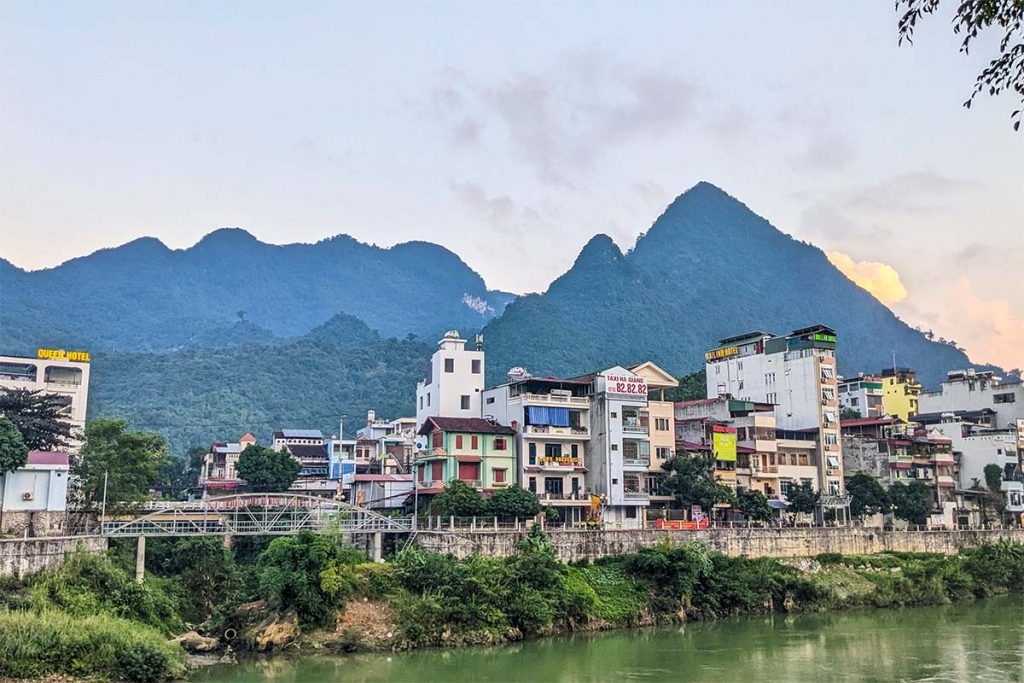
📍 Day 1: Ha Giang City – Quan Ba – Yen Minh (Approx. 100km)
- Morning (07:30): Pick up your bike in Ha Giang City. Double-check the brakes, tires, and chain, and fill the tank. Set off on National Road 4C.
- The Ride: Conquer Bac Sum Pass, a massive, snake-like mountain road. Reach the Quan Ba Heaven Gate and stop to admire the Twin Mountains.
- Lunch: Eat in Tam Son town (Quan Ba). Afterward, instead of taking the dusty main highway to Yen Minh, take the lesser-known backroad via the Lonely Tree (Lao Va Chai). It’s narrower, but the raw limestone scenery is magnificent and blissfully truck-free.
- Evening: Stay overnight in Yen Minh. Choose a local Tay ethnic homestay in a cultural tourism village rather than a generic hotel in the town center to enjoy the quiet country air.
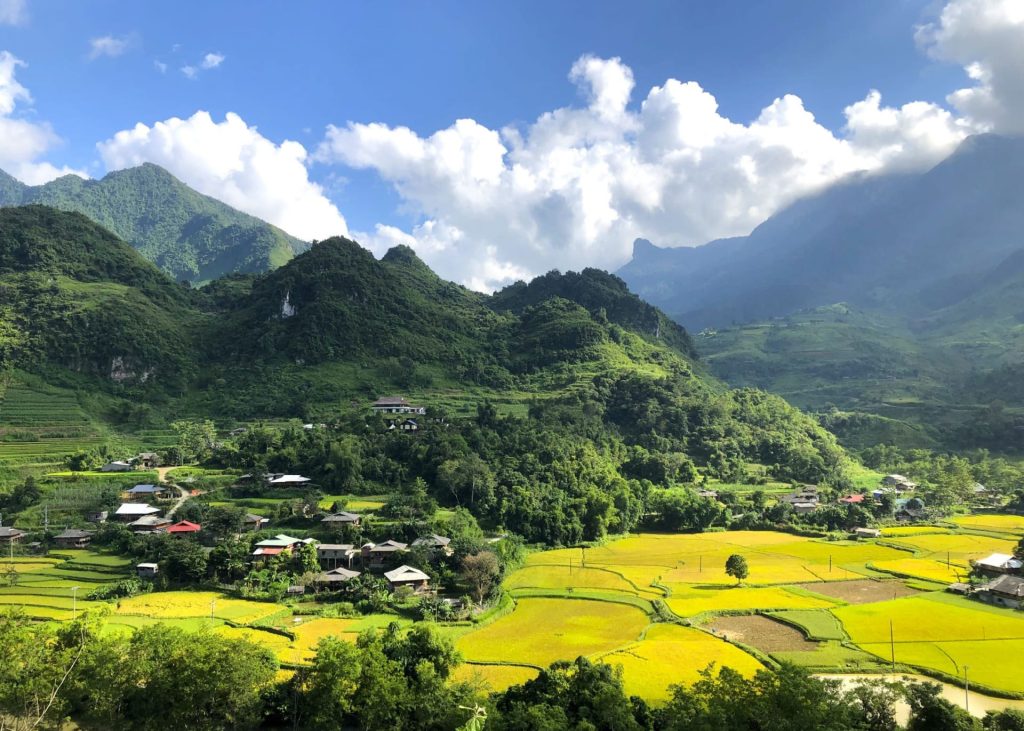
📍 Day 2: Yen Minh – Tham Ma Pass – Hmong King’s Palace – Dong Van (Approx. 80km)
- Morning (07:00): Leave Yen Minh early to catch the morning mist rising over Tham Ma Pass, the legendary nine-turn zigzag road. Heading out early helps you avoid the commercialized crowds at the top.
- Mid-day: Visit the Lung Cam Cultural Village (featuring the historic Pao’s House) and the Hmong King’s Palace (Vuong Chinh Duc) in Sa Phin. Take time to learn about the region’s history of geopolitical independence and the historic opium trade.
- Afternoon: Ride all the way up to the Lung Cu Flag Tower—the northernmost point of Vietnam, right on the Chinese border.
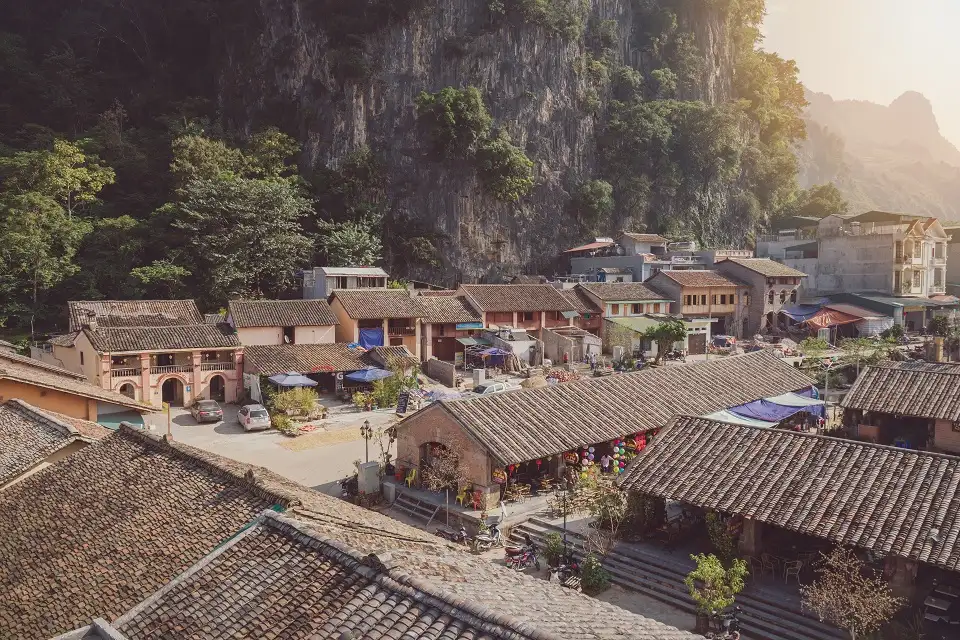
- Evening: Arrive in Dong Van town. Wander through the Dong Van Old Quarter and have a hot drink inside a 100-year-old clay house.
Insider Tip: “At the Hmong King’s Palace, hire a local Hmong site guide. The stories they share about the architecture, how massive stone slabs were moved entirely by hand, and the family’s secrets are worth far more than just walking around taking photos.”
📍 Day 3: Dong Van – Ma Pi Leng Pass – Nho Que River – Du Gia (Approx. 90km)
This is the most jaw-dropping yet physically demanding day of the entire loop.
- Morning (06:30): Tackle the Ma Pi Leng Pass, one of Vietnam’s “Four Great Mountain Passes.” At this hour, the sun is just rising, the deep valley below is filled with clouds, and most importantly, the road is quiet.
- The Trek: Ride down to the pier and take a boat ride on the emerald Nho Que River, cutting directly through the towering Tu San Canyon.
- Afternoon: From Meo Vac, head south toward Du Gia via Mau Due. The road to Du Gia contains heavily gravel-strewn patches and broken asphalt—ride slowly and keep a firm grip on your handlebars.
- Evening: Overnight in Du Gia, a pristine, isolated valley village populated by the Tay and Hmong ethnic minorities, tucked completely away from the noisy outside world.
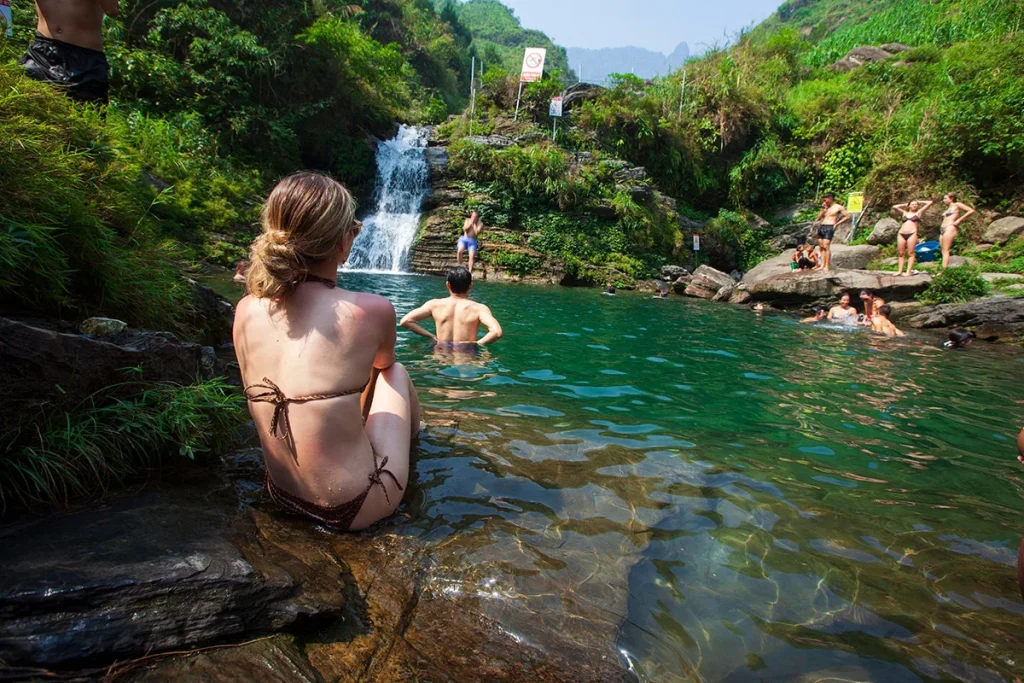
📍 Day 4: Du Gia – Du Gia Waterfall – Lung Tam Village – Ha Giang City (Approx. 85km)
- Morning: Hike out to the Du Gia Waterfall (Tham Luong) and take a dip in the cold, crystal-clear spring water. It’s the ultimate way to soothe your muscles after three long days in the saddle.
- Lunch: Ride back via the dramatic Duong Thuong valley and visit the Lung Tam Weaving Cooperative. Witness the complex 41-step manual process the Hmong women use to turn raw hemp plants into intricate indigo textiles.
- Afternoon (16:00): Return to Ha Giang City. Drop off your bike, freshen up at a local hostel, and board your overnight sleeper bus back to Hanoi.
💰 3. Realistic Ha Giang Loop Cost Breakdown
For a 4-day, 3-night self-drive trip, expect to spend between 2,500,000 to 3,500,000 VND per person ($100 – $140 USD), excluding your sleeper bus ticket from Hanoi.
| Cost Category | Average Price (VND) | Notes |
| Bike Rental | 150,000 – 200,000 / day | Semi-automatic/manual (includes protective gear) |
| Fuel / Petrol | ~250,000 total | Fill up whenever you see a major gas station |
| Accommodation | 150,000 – 300,000 / night | Authentic village homestays (Dorm or private room) |
| Food & Drink | 200,000 – 300,000 / day | Local breakfast, family-style dinners at homestays |
| Tickets & Boats | ~250,000 | Entrance fees for Palaces, Lung Cu, and Nho Que boat |
Note: If you hire an Easy Rider, add roughly 600,000 – 800,000 VND ($24 – $32 USD) per day to cover the rider’s fee, gas, meals, and accommodation.
💬 4. Frequently Asked Questions (FAQ)
❓ Is it legal to ride the Ha Giang Loop as a foreigner?
Vietnamese traffic police enforce regulations strictly on the loop. To ride legally, foreigners must hold a valid International Driving Permit (IDP) along with their home country motorcycle license, or a temporary Vietnamese motorcycle license. Proper bike insurance and mirrors are mandatory. Reputable rental shops will help check your paperwork before handing over the keys.
❓ Can I ride the loop on an automatic scooter?
While physically possible on the paved main roads, it is highly discouraged. The long, steep downhills require continuous engine braking. Automatic scooters rely entirely on mechanical brakes, which can quickly overheat, melt the brake pads, and fail entirely on descents like Ma Pi Leng. Stick to a semi-automatic or manual bike.
❓ Do I need to book homestays in advance?
A: During the peak season (September to November) or major holidays, booking in advance is highly recommended, especially for remote villages like Du Gia or Lung Cu where quality rooms are limited. If you roll in without a booking, you risk being stuck in noisy, sterile concrete motels in the main transit towns.
Final thoughts: The Ha Giang Loop is not a vacation; it’s an adventure that tests your resilience and rewards you with some of the most raw landscapes on earth. Ride smart, respect the local culture, and let the road surprise you.