
Sa Pa Rice Terrace Calendar: When & Where to See the Best Golden Harvest

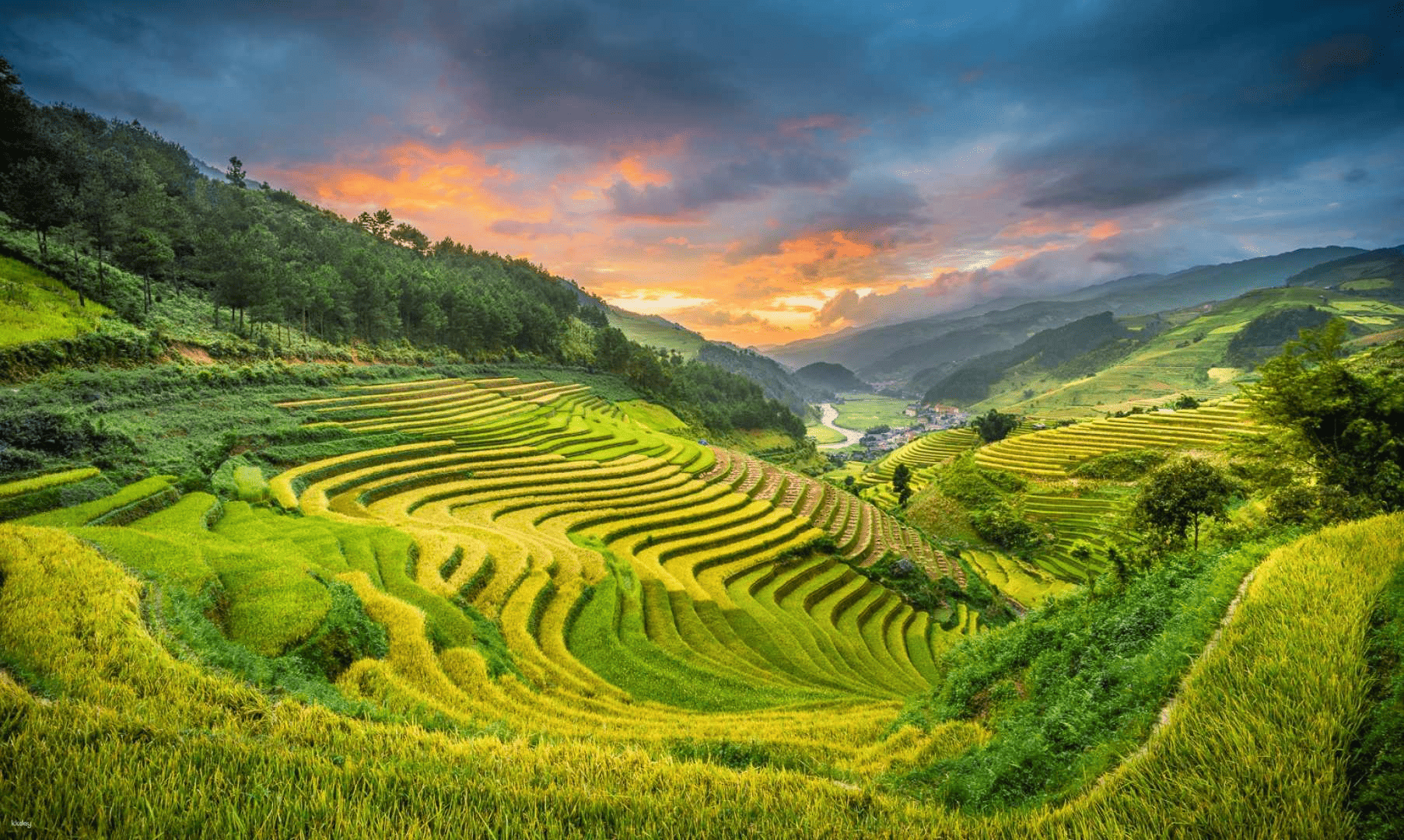
The cascading rice terraces of Sa Pa are widely considered one of the most breathtaking man-made wonders in Southeast Asia. Carved into the mountainsides of the Hoang Lien Son range by ethnic minority groups over centuries, these fields completely transform the landscape with changing colors throughout the year.
However, timing is everything. If you visit a week too early, the fields are still green; a week too late, and you will find nothing but bare mud after the harvest. This comprehensive Sa Pa Rice Terrace Calendar guides you through the exact lifecycle of the fields and points out the absolute best locations to capture the legendary golden harvest.
📌 QUICK OVERVIEW
- Water-Pouring Season (Mùa Nước Đổ): May to June (Mirror-like flooded terraces).
- Green Fields Season: July to Early August (Lush, vibrant emerald landscapes).
- Golden Harvest Peak (Mùa Lúa Chín): Late August to Mid-September (The Absolute Best Time).
- Post-Harvest Season: October to April (Empty fields, winter snow, or spring blossoms).
🗺️ QUICK ANSWER: What is the exact best time to see golden rice in Sa Pa?
The absolute best time to see the golden rice terraces in Sa Pa is between the last week of August and the second week of September. During this narrow 3-week window, the entire Muong Hoa Valley turns into a brilliant golden yellow just before local ethnic farmers begin their annual harvest.
📊 Month-by-Month Sa Pa Rice Terrace Breakdown
This seasonal calendar helps you understand what the terraces look like in each month so you can plan your trip based on your visual preferences.
| Season & Months | What the Terraces Look Like | Visual Highlights | Pros & Cons for Travelers |
| May – June (Water-Pouring) | The fields act as giant mirrors reflecting the sky and clouds as farmers flood the terrain for planting. | Unique reflections; highly artistic photography. | 🟢 Fascinating local farming activity. 🔴 Higher chance of early summer rain. |
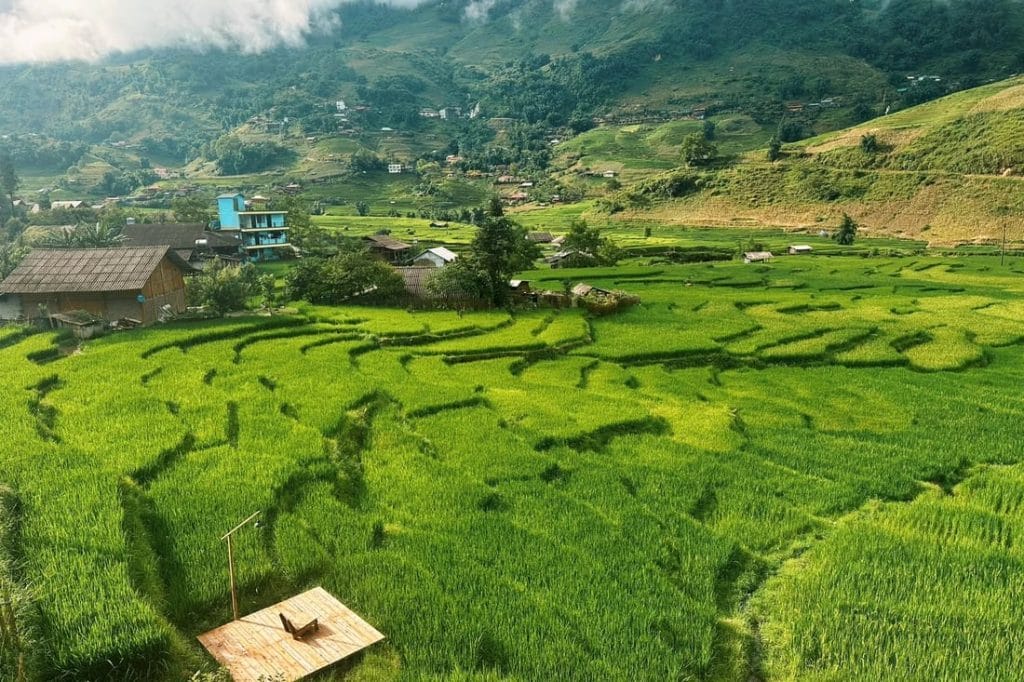
| July – Early August (Growing) | The rice grows rapidly, blanketing the entire valley in an intensely vibrant emerald green. | Endless waves of lush green valleys. | 🟢 Very photogenic and fresh air. 🔴 Hot weather and frequent afternoon showers. |
| Late August – Mid-Sept (Harvest) | The Golden Peak. The fields ripen simultaneously, turning the mountains into oceans of gold. | Stunning contrast between golden fields and dark mountains. | 🟢 The ultimate Sa Pa view. Perfect weather. 🔴 Highest tourist crowds of the year. |
| Late September (Post-Harvest) | Most lower valleys are completely harvested, leaving yellow stalks and bare mud. | Seeing local families working together to gather the grain. | 🟢 Less crowded; cheaper accommodation. 🔴 The iconic golden vistas are mostly gone. |
📍 Top 3 Viewpoints for Sa Pa Rice Terrace Photography
To see the grandest scale of the terraces, skip the town center and head directly down into the valley. Here are the top three coordinates to bookmark:
1. Y Linh Ho Village (Best for Morning Light)
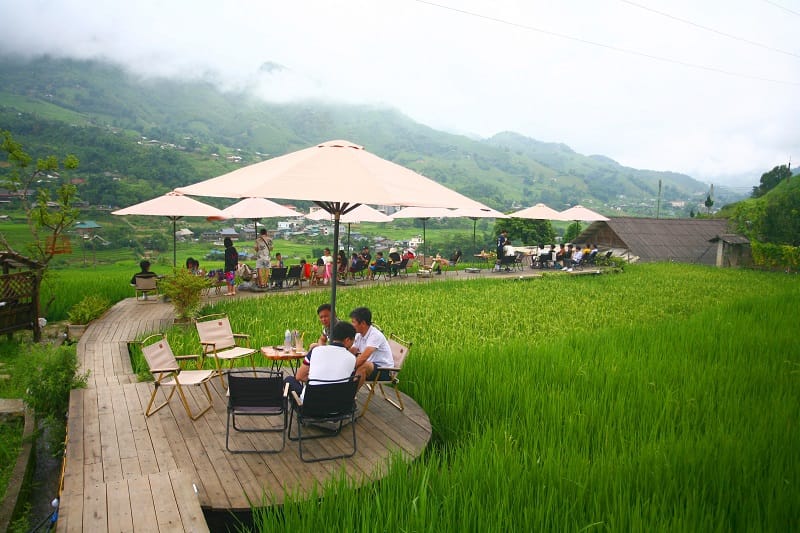
Located at the upper rim of the Muong Hoa Valley, Y Linh Ho offers deep, dramatic drops. Walking along the small dirt tracks here gives you a panoramic view of steep, stacked terraces that look like giant staircases climbing into the clouds.
2. Ta Van & Lao Chai Villages (Best for Immersive Walks)
This is the heart of the terrace action. The valley floor flattens out slightly here, allowing you to walk right along the edges of the muddy dikes separating the fields. You can stand directly amidst the tall, ripe stalks of rice and interact with local H’mong and Giay farmers.
3. Tram Ton Pass / Fansipan Cable Car (Best for Bird’s-Eye Views)
If you want to appreciate the sheer scale of human engineering, look at it from above. The Fansipan Cable Car glides silently right over the Muong Hoa Valley, offering a breathtaking, unobstructed aerial view of the geometric patterns formed by the golden fields.
🚗 PRACTICAL TIPS FOR HARVEST SEASON TRAVELERS
- Book Accommodations Early: Because the golden window is short, hotels, eco-lodges, and luxury limousines from Hanoi fill up months in advance. Aim to book your trip at least 4–6 weeks ahead.
- Stay in a Valley Homestay: Instead of staying in Sa Pa town center (which is heavily urbanized), book a bungalow or homestay in Ta Van or Nam Cang. Waking up to the smell of ripe rice right outside your window is an unforgettable experience.
- Drone Regulations: Sa Pa is a dream destination for drone pilots. However, flying near the Fansipan cable car lines or military zones is strictly prohibited. Always ask your local guide where it is safe to fly.
❓ FREQUENTLY ASKED QUESTIONS (FAQs)
Q1: Why do the fields only turn golden once a year in Sa Pa?
- Unlike the flat southern deltas of Vietnam where farmers can harvest 2 to 3 times a year, the rugged mountainous terrain and cold winters of Sa Pa only allow for one single rice crop per year.
Q2: Is the harvest date the same every single year?
- No. The exact harvest dates depend entirely on weather patterns and when the rains arrive in spring. Generally, the lower-altitude valleys (like Lao Chai) ripen first, while the higher-altitude villages (like Ta Phin) ripen 1 to 2 weeks later.
Q3: What happens if I miss the golden season and arrive in October?
- While the rice will be gone, October is the peak of the Sapa Cloud-Hunting Season. The weather becomes crisp, dry, and cool, and the empty terraces are often filled with dramatic waves of morning fog, creating a completely different, mystical atmosphere.