

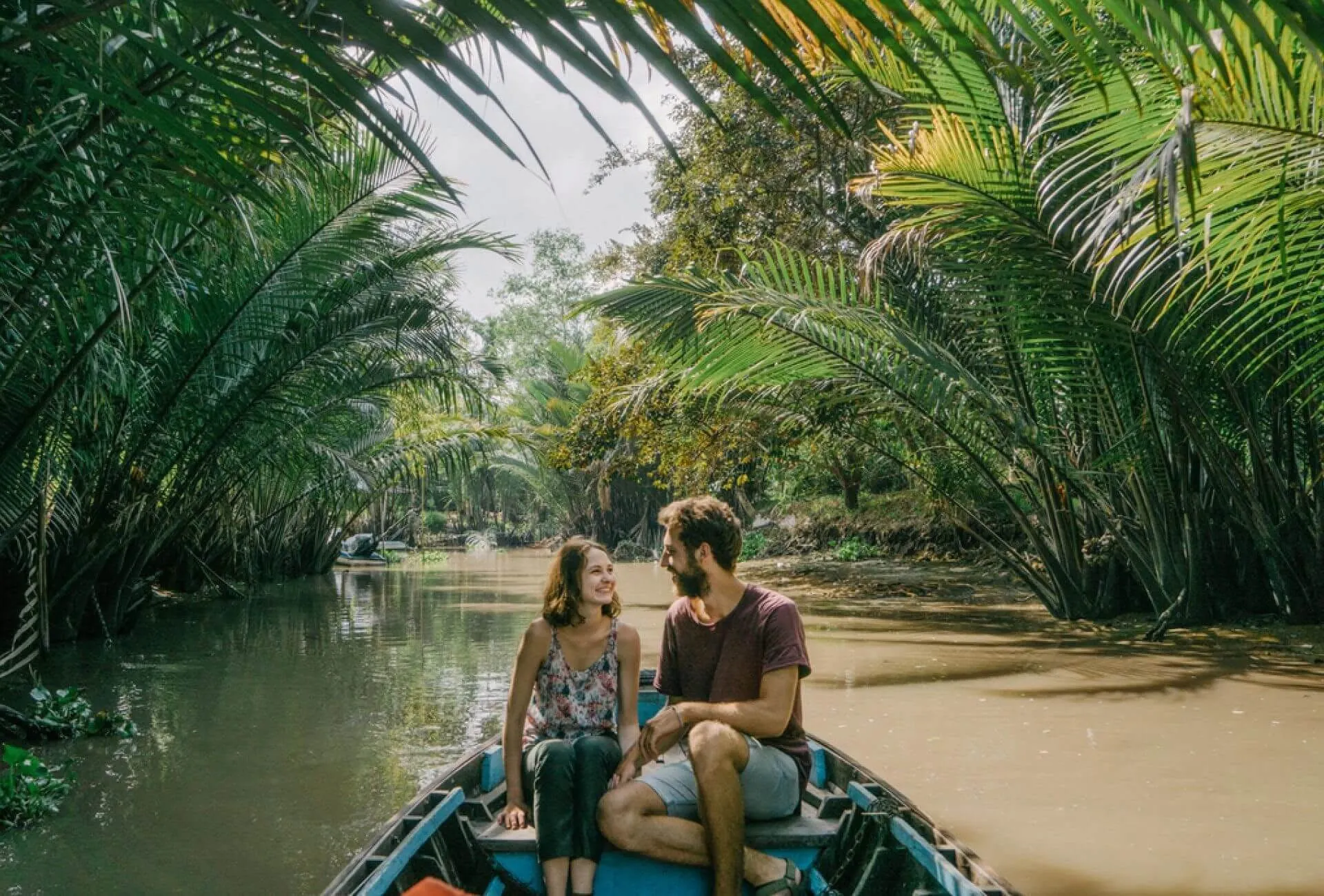
Known as Vietnam’s “Rice Bowl,” the Mekong Delta (Đồng bằng Sông Cửu Long) is a vast, maze-like waterland where life revolves around iconic rivers, canals, and floating markets. Spanning southwest from Ho Chi Minh City to the Gulf of Thailand, this fertile region is famous for tropical fruit orchards, lush mangrove forests, rich culture, and warm local hospitality.
Whether you are seeking to experience authentic river life on a wooden sampan boat, explore historic temples, or taste fresh tropical fruits straight off the tree, the 7 best places to visit in Mekong Delta will give you an unforgettable journey through Vietnam’s watery countryside.
Let’s explore the top destinations you must include on your Mekong adventure!
🌾 The Must-See | 7 Best Places to Visit in Mekong Delta
1. Cai Rang Floating Market (Chợ Nổi Cái Răng – Cần Thơ)
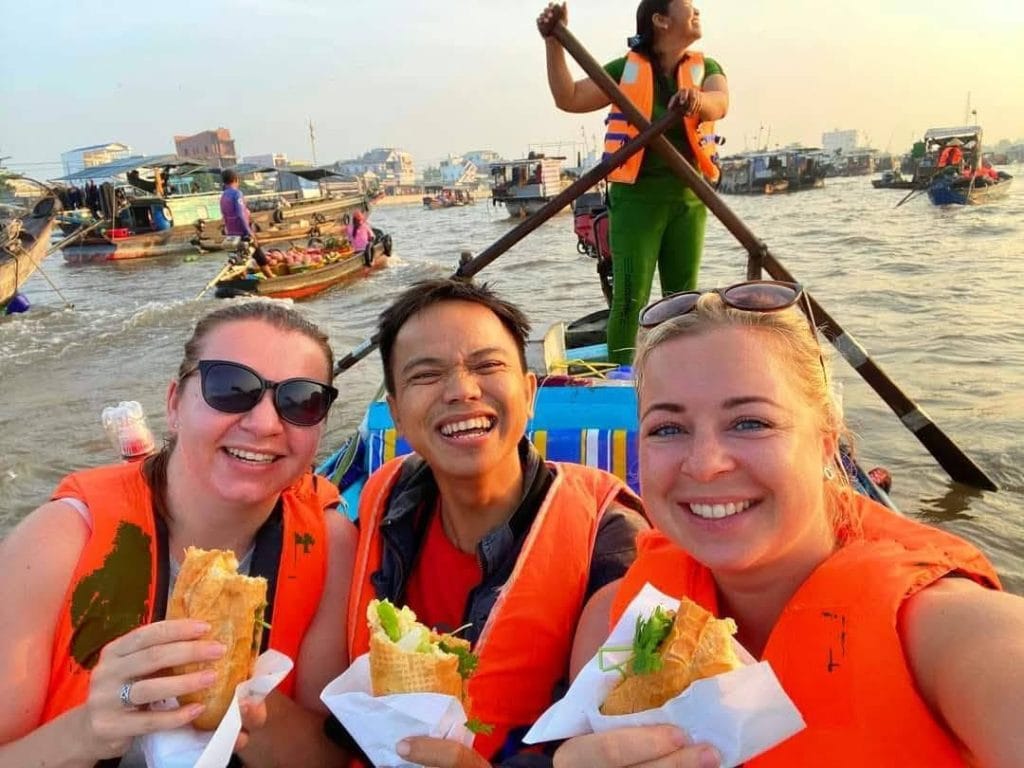
Located in Can Tho, the capital city of the Mekong Delta, Cai Rang is the largest and most famous floating market in the region. Long before roads connected the delta, locals gathered here on hundreds of wooden boats to trade wholesale fruits, vegetables, and regional goods.
- What to See & Do: Rent a early morning boat ride to witness vendors hanging sample produce on tall bamboo poles (Cây Bẹo) above their boats. Enjoy a hot bowl of Hủ Tiếu (rice noodle soup) served directly from floating kitchen boats!
- Travel Tip: Arrive between 5:30 AM and 7:00 AM to see the market at its most active and colorful peak.
2. Tra Su Cajuput Forest (Rừng Tràm Trà Sư – An Giang)
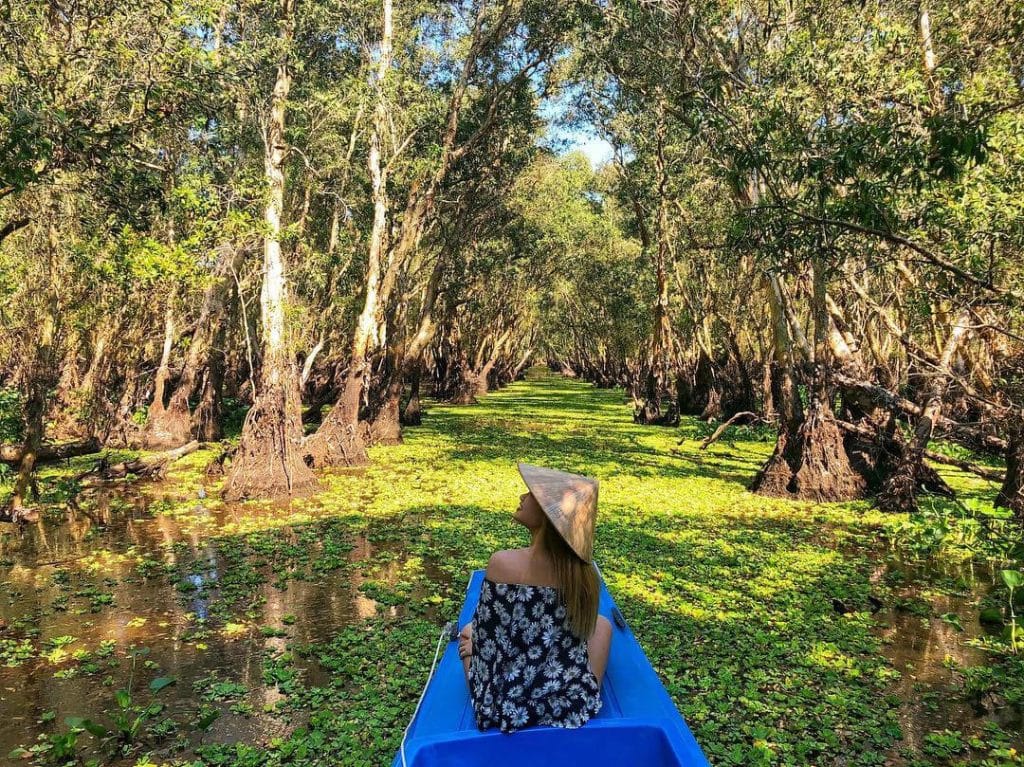
Tucked near Chau Doc in An Giang Province, Tra Su Cajuput Forest is a stunning 850-hectare eco-reserve. It is best known for its calm, emerald-green waterways completely coated in carpet-like layers of duckweed (Bèo).
- What to See & Do: Glide silently through narrow water canals on a traditional hand-rowed sampan, climb a wooden observation tower to spot rare waterbirds, and walk across Vietnam’s longest bamboo bridge.
- Travel Tip: The best time to visit is during the high-water season (Mùa Nước Nổi) from September to November, when aquatic life and vegetation are at their lush peak.
3. Ben Tre Coconut Country (Bến Tre)
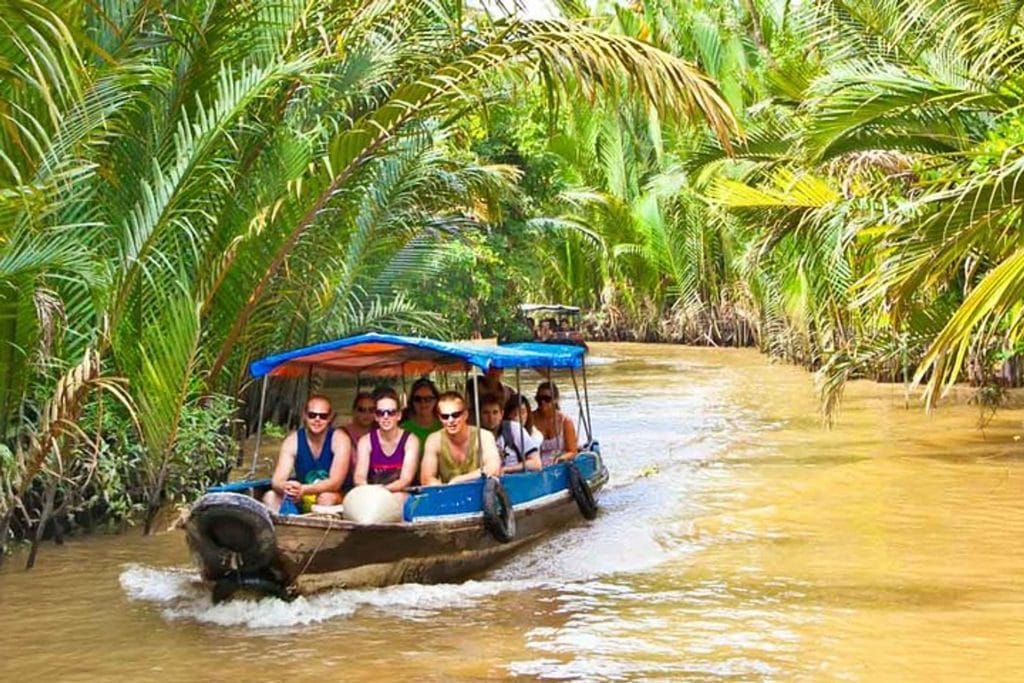
Famous as the “Capital of Coconuts,” Ben Tre is a peaceful province made of islands and islets surrounded by the Mekong River’s tributaries. It offers a quieter, more intimate rural experience compared to busier tourist hubs.
- What to See & Do: Take a boat ride through winding coconut palm canals, visit family-run workshops producing traditional coconut candy and crafts, and cycle along peaceful village paths under shady fruit orchards.
- Travel Tip: Try fresh coconut jelly (Rau Câu Dừa) and enjoy a traditional lunch featuring local fish like Elephant Ear Fish (Cá Tai Tượng).
4. Sam Mountain & Chau Doc (Núi Sam & Châu Đốc – An Giang)
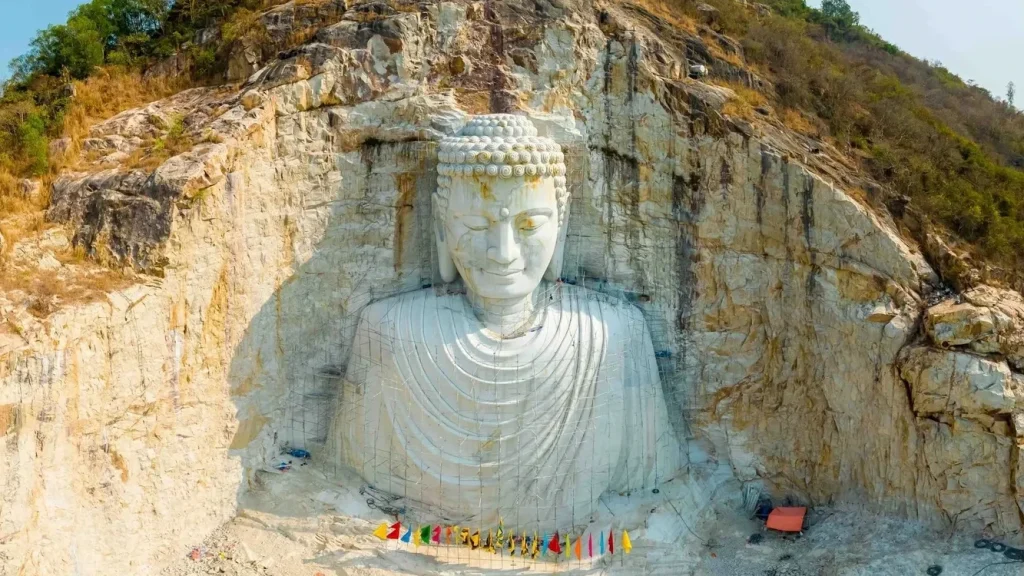
Situated near the Cambodian border, Chau Doc is a culturally diverse town where Vietnamese, Khmer, Cham, and Chinese communities live harmoniously. Dominating the flat landscape is Sam Mountain (Núi Sam), a major pilgrimage site.
- What to See & Do: Visit the sacred Bà Chúa Xứ Temple at the foot of the mountain, climb or ride a cable car up Sam Mountain for sweeping views of rice paddies crossing into Cambodia, and visit floating fish farms along the river.
- Travel Tip: Take a walk around Chau Doc’s night market to sample famous fermented fish delicacies (Mắm Châu Đốc).
5. Sa Dec Flower Village & Dong Thap (Làng Hoa Sa Đéc – Đồng Tháp)
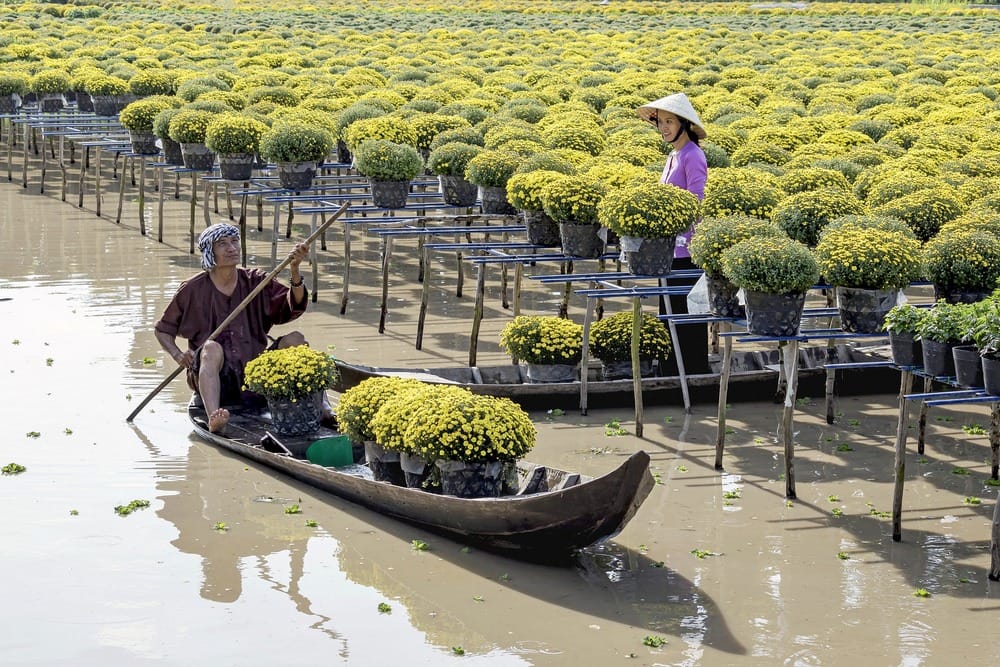
Located in Dong Thap Province, Sa Dec is legendary as the floral capital of the Mekong Delta, supplying millions of flowers across Southern Vietnam.
- What to See & Do: Explore Sa Dec Flower Village, where flowers are grown on raised platforms above flooded fields (farmers tend to them on small canoes!). Afterwards, visit the historic Huynh Thuy Le Ancient House, famous for its role in Marguerite Duras’ novel The Lover.
- Travel Tip: Visit during the weeks leading up to the Lunar New Year (Tet) when the flower fields erupt in vibrant, full bloom.
6. Tan Lap Floating Village (Làng Nổi Tân Lập – Long An)
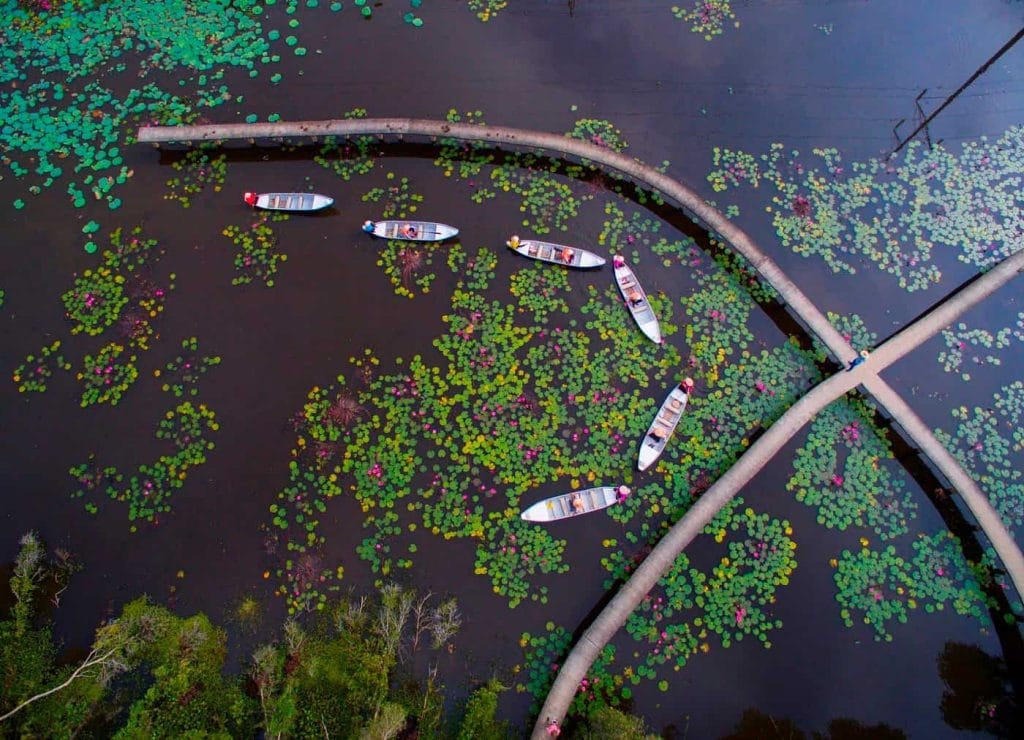
Located just a 2-hour drive from Ho Chi Minh City in Long An Province, Tan Lap Floating Village is a tranquil wetland reserve set inside a vast cajuput forest.
- What to See & Do: Walk along a 5 km concrete elevated footpath winding through dense cajuput trees, take a boat trip down the Rung Canal, and climb the 38-meter observation tower to admire panoramic forest canopy views.
- Travel Tip: This is one of the easiest Mekong Delta destinations to visit as a quick day trip from Ho Chi Minh City.
7. Vinh Trang Pagoda (Chùa Vĩnh Tràng – Mỹ Tho / Tiền Giang)
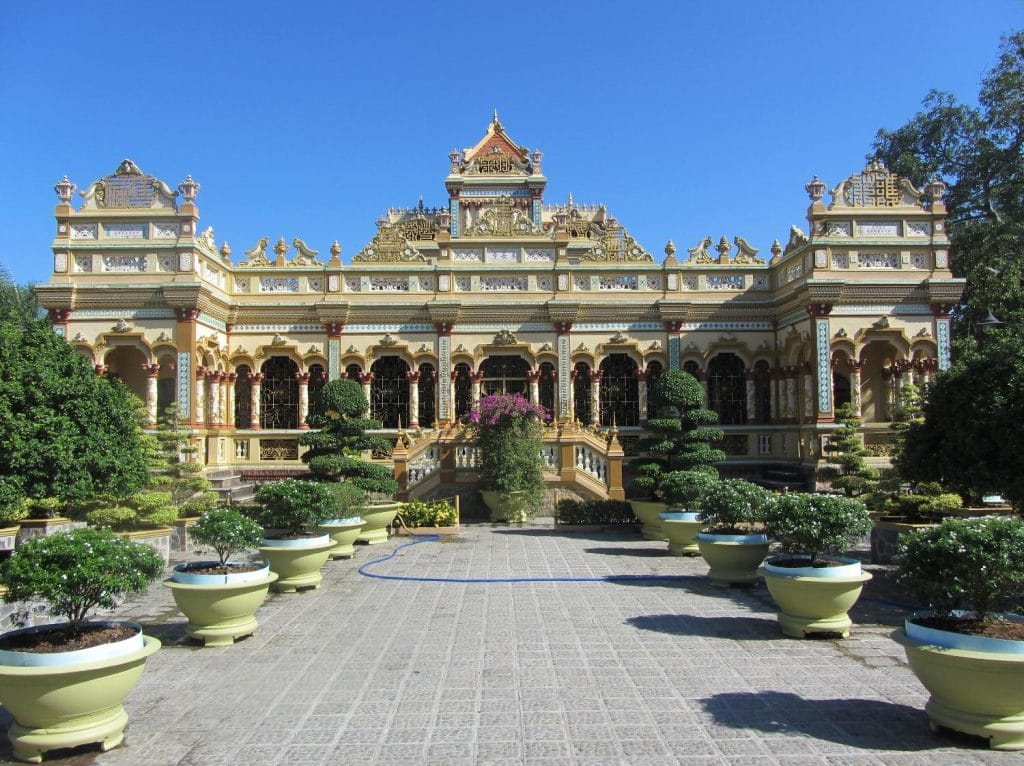
Situated in My Tho, Vinh Trang Pagoda is the largest and most celebrated Buddhist temple in Tien Giang Province. Built in 1849, its architecture is a fascinating blend of European Renaissance, Roman arches, and classical Asian temple design.
- What to See: Marvel at three giant statues: a towering 20-meter standing Amitabha Buddha, a massive smiling Laughing Buddha, and a tranquil Reclining Buddha set within lush, manicured fruit gardens.
- Travel Tip: Since My Tho is the gateway to the Mekong Delta, Vinh Trang Pagoda serves as a convenient stop on your way further south.
🗺️ Recommended 3-Day Mekong Delta Itinerary
Here is a well-balanced itinerary covering the best highlights:
| Day | Time | Planned Sightseeing |
| Day 1 | Morning | Depart HCMC, stop at Vinh Trang Pagoda (My Tho), and head to Ben Tre. |
| Afternoon | Sampan boat ride through coconut canals & cycling in Ben Tre. | |
| Evening | Transfer to Can Tho city and explore the Ninh Kieu Wharf. | |
| Day 2 | Early Morning | Experience Cai Rang Floating Market at sunrise & breakfast on a boat. |
| Afternoon | Drive to Chau Doc, stopping at Sa Dec Flower Village on the way. | |
| Evening | Sunset views from Sam Mountain and dinner in Chau Doc. | |
| Day 3 | Morning | Boat tour through Tra Su Cajuput Forest in An Giang. |
| Afternoon | Return towards HCMC, stopping at Tan Lap Floating Village. | |
| Evening | Arrive back in Ho Chi Minh City. |
💡 Practical Travel Tips for Visiting Mekong Delta
- Best Time to Visit: The dry season runs from December to May, offering sunny weather and ripe fruit harvests. The floating water season (Mùa Nước Nổi) from September to November is the best time for visiting cajuput forests and bird sanctuaries.
- Insect Protection: Because of the rivers and wetlands, mosquitoes can be prevalent. Always pack effective mosquito repellent and wear lightweight, long-sleeved clothing during evening hours.
- Respect Local Customs: When taking photos of floating market traders or locals in their villages, a friendly smile or asking permission goes a long way!
❓ Frequently Asked Questions (FAQ)
How many days should I spend in the Mekong Delta?
Two to three days is recommended. A 2 to 3-day trip allows you to travel beyond day-tourist spots (like My Tho) and reach authentic highlights like Can Tho’s floating markets, Ben Tre coconut canals, and An Giang’s cajuput forests.
Can I visit the Mekong Delta as a day trip from Ho Chi Minh City?
Yes! Destinations like Ben Tre, My Tho (Vinh Trang Pagoda), or Tan Lap Floating Village are only 1.5 to 2.5 hours away, making them easy for a 1-day excursion.
Are the floating markets in the Mekong Delta active every day?
Yes, floating markets like Cai Rang operate daily. However, business slows down during major holidays like Lunar New Year (Tet).
What local food should I try in the Mekong Delta?
The region is famous for delicious rural cuisine! Don’t miss Cá Tai Tượng Chiên Xù (crispy deep-fried elephant ear fish), Lẩu Mắm (fermented fish hotpot), Bánh Xèo Miền Tây (giant crispy southern crepes), and fresh tropical fruits like durian, rambutan, and mango.