

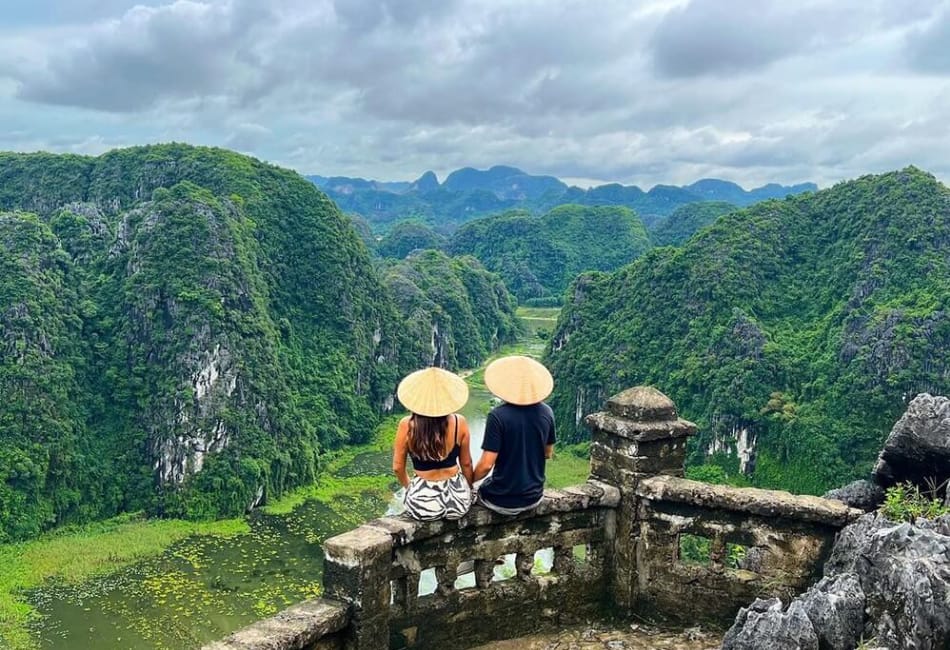
Ninh Binh is world-famous for its breathtaking karst limestone landscapes—often called “Ha Long Bay on Land”—the UNESCO World Heritage Site of Trang An, thousand-year-old historic temples, and winding rivers flowing through emerald rice fields.
Top 5 Highlights That Put Ninh Binh on the Map:
- 🏛️ UNESCO World Heritage Site: Trang An Landscape Complex
- ⛰️ Dramatic Limestone Karsts: Known as “Ha Long Bay on Land”
- 🏯 Historic Ancient Capital: Hoa Lu Ancient Capital
- 📸 Epic Viewpoints: Hang Mua Peak (Dragon Viewpoint)
- 🍽️ Unique Local Cuisine: Crispy Rice (Cơm Cháy) & Mountain Goat Meat (Thịt Dê Nút)
1. Dramatic Limestone Karsts: The “Ha Long Bay on Land”
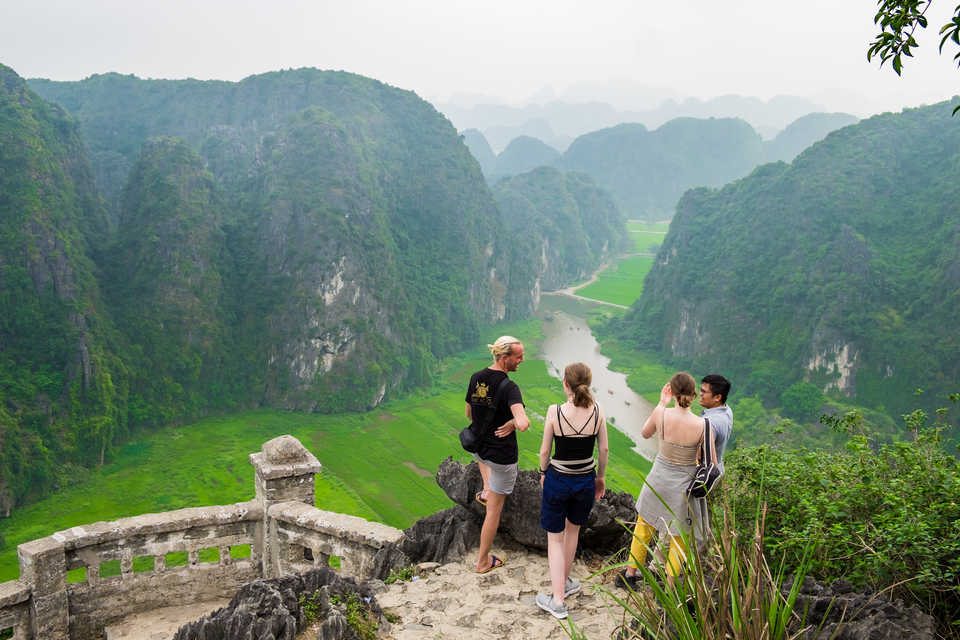
If Ha Long Bay is a seascape of mythical ocean spires, Ninh Binh is its enchanting inland counterpart. This unique geology is the primary answer to “what is Ninh Binh famous for”: it contains one of the most stunning limestone karst landscapes in the world.
Towering limestone peaks rise dramatically from emerald green rice fields, while peaceful rivers wind through lush valleys and natural caves—creating a living landscape painting. Unlike Ha Long, where the rocks rise directly out of the sea, Ninh Binh’s limestone formations are surrounded by freshwater lakes, paddy fields, traditional villages, and primeval rainforests.
Iconic Spots to Experience the Karst Landscape:
- Tam Coc: Nicknamed the “Ha Long Bay among rice paddies,” famous for the Ngo Dong River winding around towering mountains, three natural caves, and golden rice fields.
- Trang An: Features a grander, more dramatic landscape with an intricate network of limestone caves and ancient temples hidden inside the valley forests.
💡 Local Tip: The landscape reaches its absolute peak of beauty when the rice paddies turn golden during harvest season (late May to June) and September to October, making Tam Coc look like a vibrant watercolor painting.
2. Trang An: A UNESCO Mixed World Heritage Site
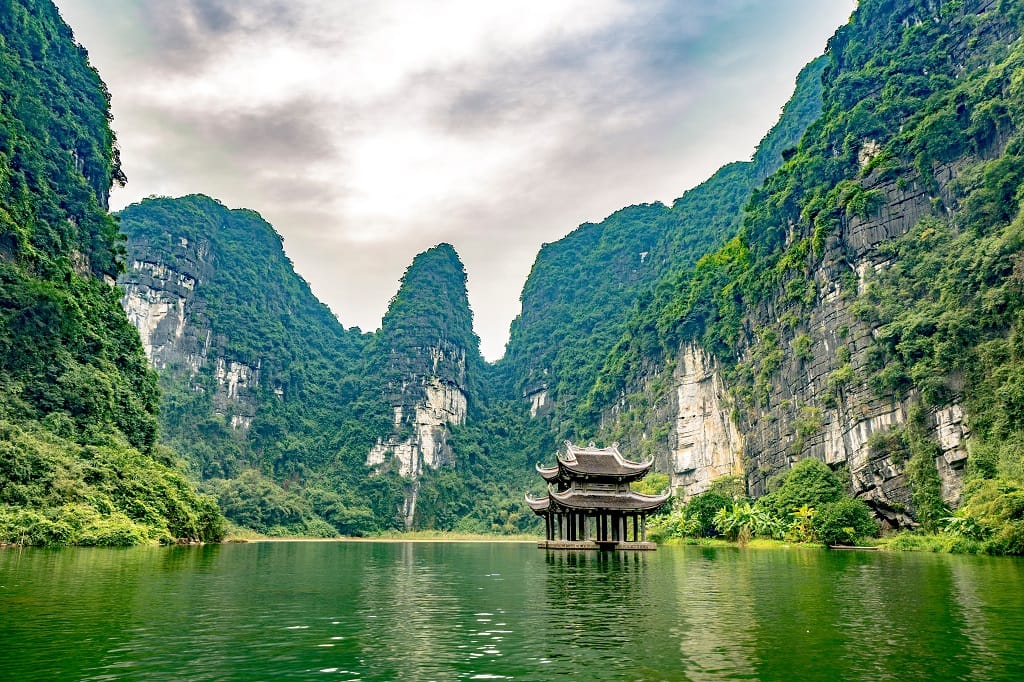
If you must pick one landmark that defines Ninh Binh, Trang An Landscape Complex takes the top spot.
Trang An is Southeast Asia’s only UNESCO Mixed World Heritage Site (recognized for both cultural and natural criteria) and the first dual heritage site in Vietnam, inscribed in 2014. Spanning a core area of over 6,200 hectares, the complex encompasses three main zones: the Hoa Lu Ancient Capital, the Trang An–Tam Coc–Bich Dong Scenic Area, and the Hoa Lu Special-Use Primary Forest.
Must-Do Experiences in Trang An:
- Take a Sampan Boat Ride: Sit back on a traditional wooden boat rowed by local guides (who often row skillfully using their feet!) as you glide through mysterious natural cave systems. You can book your entrance tickets and Sampan boat ride in advance to avoid waiting in line when you arrive.
- Explore Underground River Caves: Pass through narrow cave entrances connected by subterranean rivers.
- Visit Hidden Valley Temples: Step off the boat to explore ancient temples tucked deep in the mountains, preserved for centuries.
Geologically, Trang An is a masterpiece formed over 250 million years, often described by international geologists as a “fossilized bay” uplifted from the ancient ocean. Archaeologists have also discovered human traces here dating back over 30,000 years, and it serves as a vital sanctuary for the critically endangered Delacour’s langur.
3. Hang Mua (Mua Cave): The Iconic Dragon Viewpoint
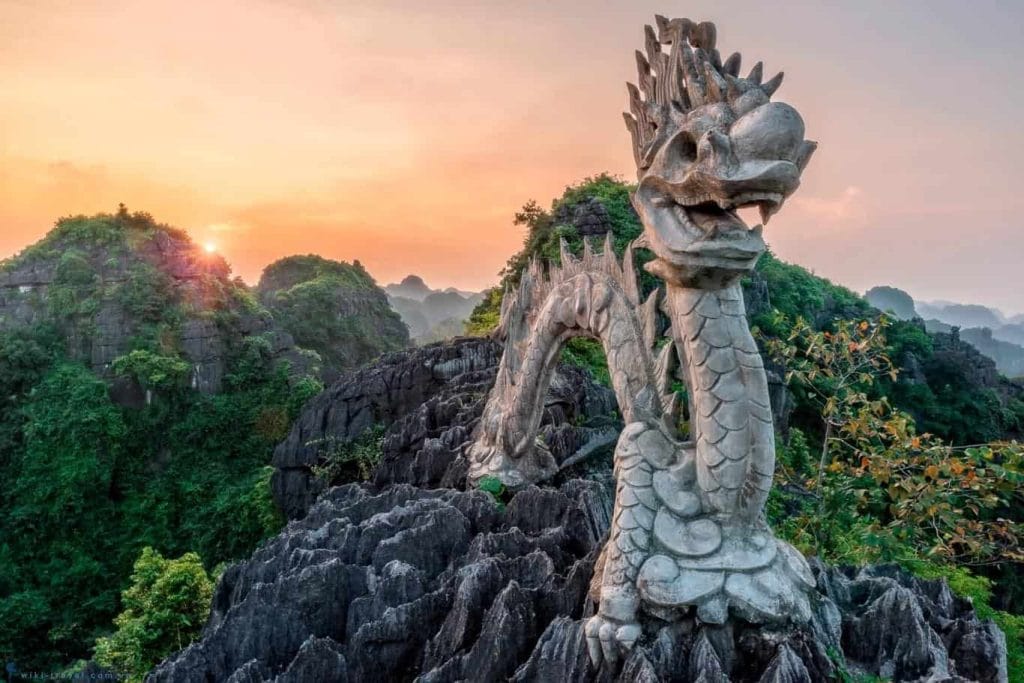
For the most famous Instagram and TikTok viewpoint in Northern Vietnam, the answer is undoubtedly Hang Mua—often referred to as the “Great Wall of Vietnam” or “Lying Dragon Mountain.”
The 500-Step Challenge:
A steep, winding stone staircase clings to the mountainside, inspired by the architecture of the Great Wall of China. Climbing the 500 steps is an active workout, but the reward at the summit makes every step worth it.
The Ultimate Summit Reward:
- 🐉 The Dragon Statue: A giant stone dragon sculpture slithers along the narrow knife-edge ridge at the top. It serves as a symbol of protection and power, and is the most sought-after photo spot in the region.
- 👁️ 360-Degree Panoramic View: Look down over the entire Tam Coc valley—the serpentine Ngo Dong River, golden rice fields, and endless karst peaks stretching to the horizon.
⏰ Best Time to Climb: Start early (6:00 AM – 8:00 AM) to beat the heat and tour buses, or climb late in the afternoon (after 4:00 PM) to catch a magical sunset. Avoid the heavy rain months of July and August when steps become slippery.
4. Hoa Lu: Vietnam’s Ancient Capital
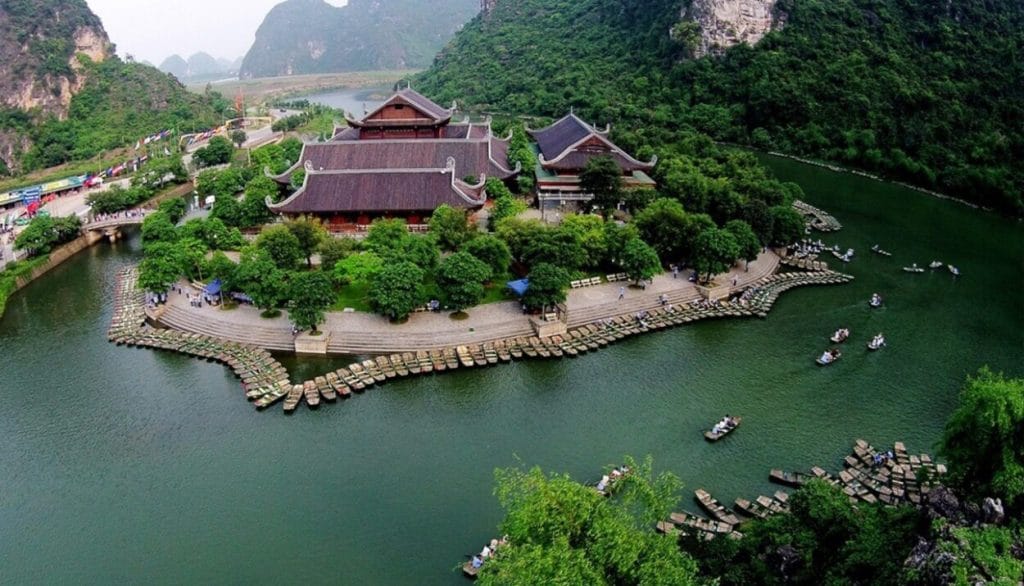
Historically, Ninh Binh holds an esteemed position: it was the first capital of an independent Vietnam.
Hoa Lu served as the political, economic, and cultural center of Dai Co Viet (ancient Vietnam) under the Dinh Dynasty (968–980 AD) and the Early Le Dynasty (980–1009 AD). In 968 AD, Emperor Dinh Tien Hoang unified the country after defeating 12 warlords and established the nation’s first centralized feudal state. When Emperor Ly Thai To moved the capital to Thang Long (present-day Hanoi) in 1010 AD, Hoa Lu became known as the “Ancient Capital.”
What made Hoa Lu unique was its natural defense: limestone mountain ranges and the Hoang Long River acted as impenetrable natural citadel walls. Ancient rulers fortified these defenses by constructing 10 earthen rampart sections to seal gaps between the karst peaks.
Historical Sites to Explore:
- Dinh Tien Hoang Temple: A spacious, serene complex housing national treasures, including an intricately carved stone royal bed.
- Le Dai Hang Temple: Located about 500 meters from Dinh Temple, dedicated to the brilliant military emperor who succeeded the Dinh line.
5. Bai Dinh Pagoda: A Massive Spiritual Center

Ninh Binh is also renowned for housing Bai Dinh Pagoda, one of the largest Buddhist complexes in Southeast Asia and a major spiritual pilgrimage site.
Covering a massive 539 hectares (including a 27-hectare ancient pagoda zone and an 80-hectare new complex), Bai Dinh is a destination of national and continental records:
- 🗿 Largest Gold-Plated Bronze Buddha Statue in Asia: Weighing 100 tons inside the Phap Chu Hall.
- 🔔 Largest Bronze Maitreya (Maitreya/Future Buddha) Statue in Southeast Asia: Weighing approximately 100 tons on the hill.
- 🔔 Largest Bronze Bell in Vietnam: Weighing 36 tons inside the Bell Tower.
- 🧘 Longest Arhat Corridor: Two corridors extending 3,400 meters in total length, housing 500 individually carved stone Arhat statues (each weighing 2 to 2.5 tons).
From the top of the 13-story Bao Thien Tower, visitors enjoy sweeping views across the entire rolling landscape of Ninh Binh. If you want to avoid crowds and enjoy the most peaceful experience at Bai Dinh Pagoda, you can choose to visit at night with a guide.
6. Unique Local Cuisine: Mountain Goat & Crispy Rice
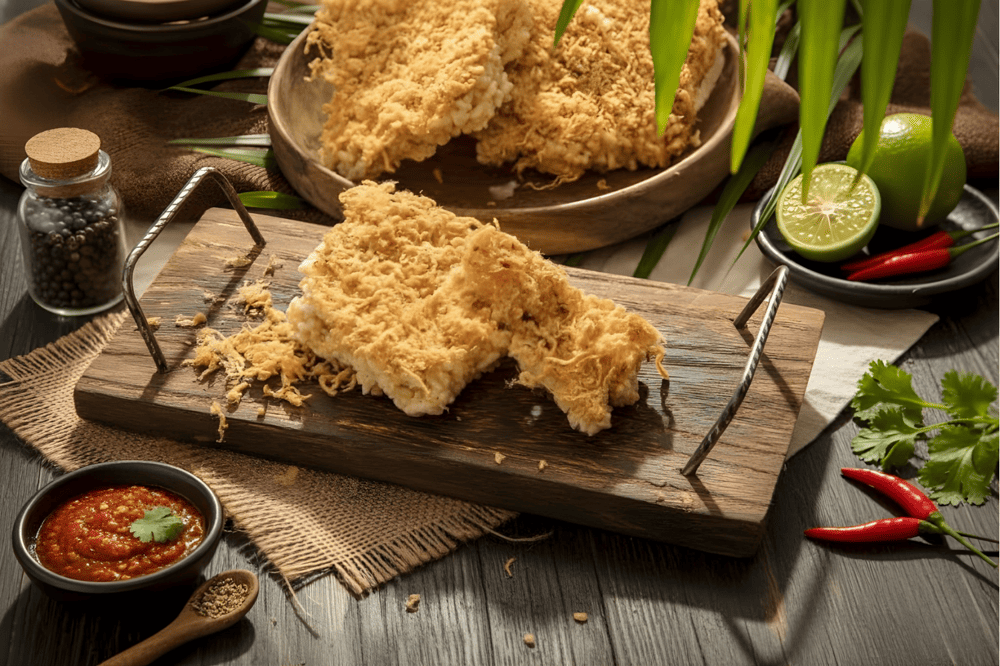
Understanding what Ninh Binh is famous for is incomplete without tasting its distinct culinary heritage, dominated by two signature local dishes:
🍚 Crispy Rice (Cơm Cháy)
Ninh Binh’s crispy rice is made from glutinous rice, cooked, flattened, sun-dried, and then deep-fried to golden perfection. The result is a crunchy rice crust topped with savory pork floss (chà bông) or served with a rich, seasoned dip. It is packaged neatly, making it the most popular edible souvenir to take home.
🐐 Mountain Goat Meat (Thịt Dê Núi)
What sets Ninh Binh goat meat apart is the terrain where the animals roam. The goats forage freely on steep limestone cliffs, grazing on wild mountain herbs. This lifestyle results in lean, firm, and highly flavorful meat.
Popular Dishes to Try:
- Dê tái chanh (Rare goat meat marinated in fresh lime juice, herbs, and sesame seeds)
- Dê nướng (Charcoal-grilled seasoned goat)
- Dê hấp gừng (Steamed goat with ginger and lemongrass)
💡 Pairing Tip: Locals typically enjoy goat dishes alongside Kim Son sticky rice wine, a potent regional spirit. For adventurous foodies, look out for Xôi Trứng Kiến (Sticky rice with ant eggs), a seasonal delicacy from the nearby Nho Quan district.
7. Frequently Asked Questions About Ninh Binh
Yes, absolutely. It offers world-class karst scenery similar to Ha Long Bay, but with a peaceful rural charm, lower costs, rich history, and far fewer cruise ships.
2 days and 1 night is ideal to explore all major highlights at a comfortable pace. However, a 1-day trip from Hanoi (about a 2-hour drive) is also very popular for travelers short on time.
Late April to June (golden rice harvest) and September to October offer the best weather and scenery. For cool, dry weather suited for hiking, visit between November and April.
Conclusion: Why You Should Visit Ninh Binh in 2026
From the surreal “Ha Long Bay on Land” scenery and UNESCO-listed river routes to the heights of Hang Mua, ancient imperial ruins, massive temple halls, and distinct regional food, Ninh Binh easily stands as one of Vietnam’s top must-visit destinations.
Whether you are an adventure seeker, photographer, history enthusiast, or culinary explorer, this ancient land offers an unforgettable escape into Northern Vietnam’s natural heartland. Plan your Ninh Binh itinerary today!